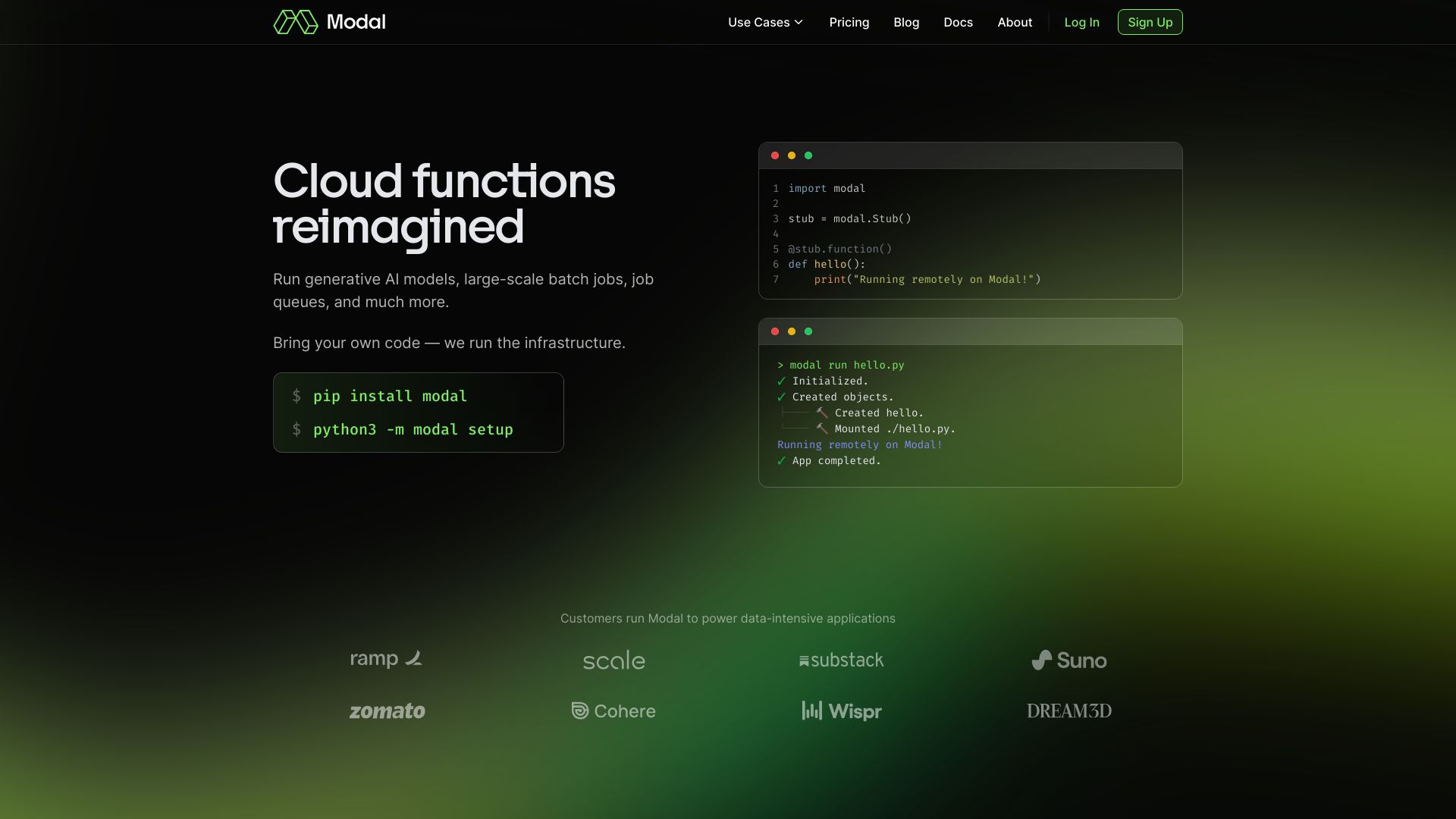
What is Modal?
Modal is a cutting-edge serverless platform designed for AI and data teams seeking to scale their compute operations efficiently. The platform enables users to run compute workloads at scale without managing complex infrastructure. It serves as an ideal solution for data scientists, engineers, and researchers who need seamless integration with AI tools. Modal empowers teams to focus on core competencies by streamlining workflows and accelerating time-to-market for projects involving large dataset processing, machine learning model training, and complex data analytics.
How to use Modal?
Getting started with Modal involves a straightforward process. First, create an account on the platform. Next, install the Modal SDK in your development environment. Then, write your Python code using Modal's decorators to define functions and workflows. Deploy your application with a single command, and Modal automatically handles resource allocation and scaling. Monitor your workloads through the dashboard, and integrate results with your existing data pipelines or visualization tools. The platform supports both local development and cloud deployment, ensuring a smooth transition from testing to production.
Core features of Modal?
- Scalable Compute Resources: Automatically scales compute resources up or down based on workload demands, optimizing performance and cost efficiency without manual intervention.
- Seamless AI Integration: Built-in support for popular AI frameworks and libraries, enabling smooth integration with TensorFlow, PyTorch, and other data science tools.
- Robust Security Measures: Multi-layered security including encryption, access controls, and regular security audits to protect sensitive data and ensure compliance.
- Intuitive API Suite: Comprehensive RESTful APIs and SDKs that allow developers to automate tasks, integrate with other services, and build custom applications with minimal coding.
- Cost-Effective Pricing: Pay-per-use model that eliminates upfront infrastructure costs and reduces expenses by only charging for actual compute time consumed.