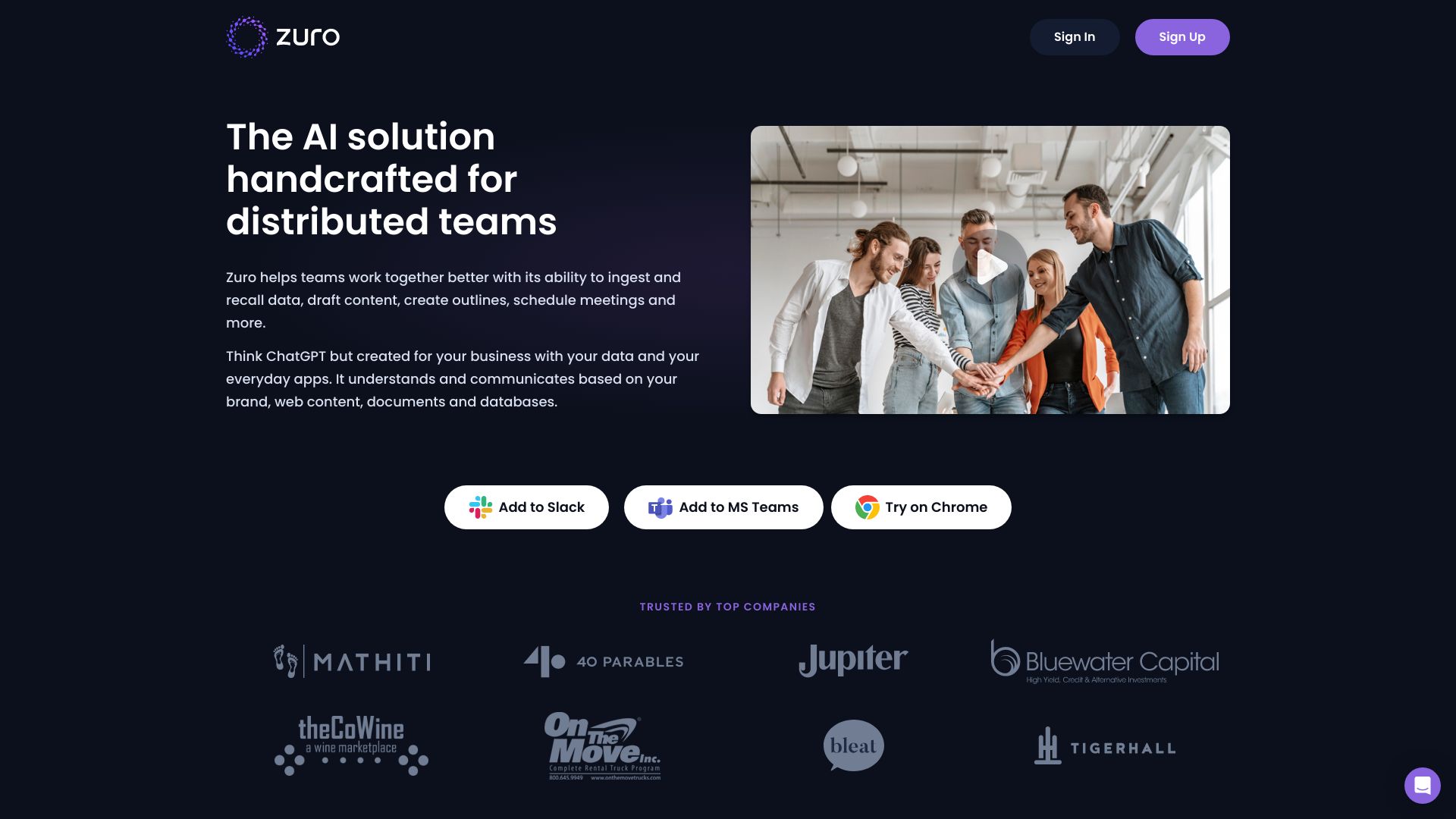
What is Zuro Enterprise?
Zuro Enterprise is a cutting-edge generative AI platform designed specifically for B2B and supply chain enterprises. It serves as a comprehensive solution to reduce operational costs and enhance productivity through advanced AI capabilities. By leveraging machine learning algorithms, Zuro Enterprise streamlines complex supply chain processes, optimizes inventory management, and automates routine tasks. The platform provides businesses with actionable insights and predictive analytics to make informed decisions, helping companies maintain competitive advantages in dynamic market environments.
How to use Zuro Enterprise?
Using Zuro Enterprise begins with seamless integration into your existing enterprise systems. After setup, the platform automatically analyzes your supply chain data, identifies inefficiencies, and recommends optimization strategies. Users can configure automated workflows for routine tasks, set inventory thresholds, and monitor real-time performance through an intuitive dashboard. The system learns from your operations over time, continuously improving its recommendations and automation capabilities. Regular performance reviews and adjustments ensure the platform adapts to your evolving business needs.
Core features of Zuro Enterprise?
- AI-Powered Inventory Optimization: Predicts demand patterns and automatically adjusts inventory levels to minimize costs and prevent stockouts.
- End-to-End Supply Chain Visibility: Provides real-time tracking and analytics across the entire supply chain network, identifying bottlenecks and opportunities for improvement.
- Intelligent Automation: Automates routine tasks such as order processing, invoice management, and supplier communications, reducing manual workload by up to 70%.
- Predictive Analytics Dashboard: Offers comprehensive insights into performance metrics, risk assessments, and future trends to support strategic decision-making.
- Customizable Workflows: Allows businesses to create tailored automation processes that align with specific operational requirements and industry standards.